























From Prison to Palace: Turning a Difficult Past into a Movement of Hope

From Prison to Palace: Turning a Difficult Past into a Movement of Hope
What began as one man’s deeply personal journey through wrongful imprisonment has grown into a wider conversation about resilience, purpose, mentorship and the power of changing the way we think.
For many people, prison represents a physical place bars, walls and locked doors. For the author of From Prison to Palace, however, the idea of imprisonment goes much deeper.
His story is one of being wrongfully arrested and imprisoned, an experience that could easily have become the defining chapter of his life. Instead, he chose to look beyond the circumstances that surrounded him and turn a painful experience into a message of hope.
That message has now found a home in From Prison to Palace, a book centred on transformation, resilience and the power of the mind.
The title itself speaks to a journey that is not necessarily about moving from one physical location to another, but about changing one’s outlook on life. Fear, hopelessness, negative thinking, difficult environments and circumstances can all become their own form of prison.
For the author, the real transformation begins when a person decides that their circumstances will not determine their future.
The book has consequently grown beyond its pages. What started as an account of a personal journey has developed into a broader movement involving crime awareness, mentorship, talent development and comedy.
From a story to a purpose
Becoming an author gave him something he had not always had the opportunity to tell his own story in his own words.
As a comedian and radio personality, audiences had become familiar with the public persona. But behind the microphone and the laughter was a personal journey that many people did not know.
From Prison to Palace changed that.
More importantly, it gave the author an opportunity to turn his experience into something that could potentially help someone else.
The book became a vehicle for conversations with young people, schools and communities, particularly around the choices that can shape a person’s future.
For him, the greatest value of telling his story is knowing that it may encourage somebody else to take a different path before finding themselves caught in circumstances that could change their lives.
His experience is no longer simply a chapter from his past. It has become part of the work he is doing today.
Taking the message into schools
One of the most significant developments has been taking the From Prison to Palace message beyond book launches and into schools.
The initiative focuses on crime awareness, mentorship, talent development and mindset transformation, with a particular emphasis on young people.
Among the programmes is a Boys Mentorship Programme designed to engage boys from Grade 8 and, ideally, remain involved in their development until they complete matric.
The thinking is simple: reach young people while they are still making some of the most important decisions about who they want to become.
Rather than waiting until a young person has already encountered the criminal justice system or made a decision with serious consequences, the programme aims to create positive intervention much earlier.
Through school visits, young people are exposed to role models, motivational speakers, people from the creative industries and individuals with different life experiences.
Talent development also forms part of the approach, because the message is not simply about telling young people what not to do.
It is about showing them what they can do.
Education, sport, creativity, entertainment and entrepreneurship can all become alternative pathways — opportunities that give young people something positive to pursue and a reason to believe in what lies ahead.
The initiative is supported by partners including eThekwini Municipality, NAC, Chery Durban, Inanda FM, Umusa Media, SAPS and CARR Radio TV.
The collaboration is important because tackling crime and youth challenges cannot be left to one person or organisation.
Where comedy meets a serious message
There is an interesting element to the initiative: its founder is, by nature, a comedian.
At first glance, comedy and crime awareness may seem like unlikely companions. But for him, the two work together.
Comedy creates an opportunity to connect.
A room full of young people may respond differently to someone who makes them laugh before delivering a serious message. A lesson can sometimes stay with someone because of the moment in which it was delivered.
That is where the author’s two worlds meet.
The book carries the deeper story, while comedy provides another way of reaching people.
It also creates an opportunity to develop young and emerging talent while using entertainment as a vehicle for positive conversations.
The result is a less conventional approach to awareness — one that does not rely entirely on fear or stern warnings, but also introduces humour, creativity and possibility.
A partnership built around impact
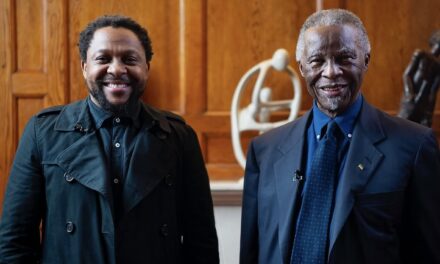
The work has also brought the author together with Msizi, whose background in entertainment and media has contributed to developing and communicating the initiatives.
Their partnership is built around a shared belief that public platforms can be used for something bigger than individual success.
For the pair, putting together an event is only part of the process.
The bigger questions are about what happens afterwards.
How many young people are reached? How can mentorship continue? How can entertainment become a tool for education? And how can positive opportunities be created for young people who may otherwise struggle to see a different future?
Those questions have helped shape the work and keep the focus on impact rather than simply visibility.
Small signs of change
Community work rarely produces instant results. Transformation is usually gradual, sometimes visible and sometimes happening quietly.
But there have already been encouraging signs.
Young boys have approached the team after engagements to share how conversations during the programmes made them reconsider certain choices or think differently about their lives.
For the team behind From Prison to Palace, those moments matter.
Schools have also begun approaching them to request awareness programmes, suggesting that there is a genuine appetite for conversations around crime, youth development and positive alternatives.
The ambition now is to move beyond once-off visits and establish meaningful, long-term mentorship.
The vision is to meet a young person in Grade 8 and walk alongside them through the years leading to matric.
A message for young South Africans
At the heart of the initiative is a message that extends far beyond crime prevention.
It is a message about possibility.
Young people may grow up surrounded by poverty, crime, peer pressure or other difficult circumstances, but those circumstances do not have to become the final definition of their lives.
The message is to find a talent, take education seriously, surround yourself with positive people, ask for help, listen to those with experience and, perhaps most importantly, continue dreaming.
The choices made today can shape tomorrow.
That is the essence of the From Prison to Palace philosophy: before circumstances can change, the mind has to begin seeing a different future.
The power of the microphone
Radio has also remained an important part of the journey.
Having a background in radio and entertainment, the author understands the reach of a microphone.
A school programme can reach hundreds of learners in a room, but radio can take the same conversation into homes, cars and communities far beyond the venue.
It creates another space to talk about crime prevention, youth development, talent, positive choices and the importance of having a vision.
For him, the microphone is not simply a tool for entertainment.
It is another platform for transforming minds.
Building the next chapter
The next phase of From Prison to Palace is about expansion.
The goal is to take the Boys Mentorship Programme into more schools, strengthen long-term relationships with young people and continue developing crime-awareness, talent-development and comedy initiatives.
There are also plans to grow the From Prison to Palace Comedy Show, creating opportunities for comedians and emerging performers while using entertainment to carry positive messages into communities.
But the ambition goes beyond a book, a comedy show or a series of school visits.
The long-term vision is to build a sustainable movement that contributes meaningfully to youth development and crime prevention.
It is a particularly powerful evolution for someone whose own life was once dramatically altered by the criminal justice system.
A wrongful imprisonment could have become the story that defined everything that came afterwards.
Instead, it became the starting point for something else.
From Prison to Palace is ultimately about refusing to remain trapped by yesterday.
It is about taking a difficult experience and finding purpose in it. It is about helping young people recognise their potential before circumstances convince them otherwise.
And perhaps most importantly, it is a reminder that sometimes the first step towards changing your life is simply believing that another life is possible.
From prison to palace, the journey begins in the mind.











Recent Comments